
How Invisalign works
Scan, plan, wear, refine, every step explained
From the first iTero scan to the final retainer, here's exactly how Invisalign moves your teeth, and what's expected of you along the way.
Smile preview at your first visit
The full process, start to finish
Invisalign is more than a set of clear trays. It's a coordinated treatment plan that uses 3D scanning, digital staging, and a series of custom aligners to move your teeth from where they are to where you want them. Our clear aligner program has carried more than 1,000 cases across the Willis & Associates group through this exact sequence, so nothing below is theory. Here's what actually happens, in the order it happens.
Step 1: Consultation
A focused exam to confirm Invisalign is the right choice for what you want to change. We assess your overall dental health (cavities, gum disease, and untreated periodontal issues need to be handled before orthodontic movement), look at your bite, take photos, and talk through what you'd like to address. If anything would benefit from being treated first, a cavity, a failing filling, we sequence that before aligner treatment.
Step 2: iTero 3D scan and same-visit smile preview
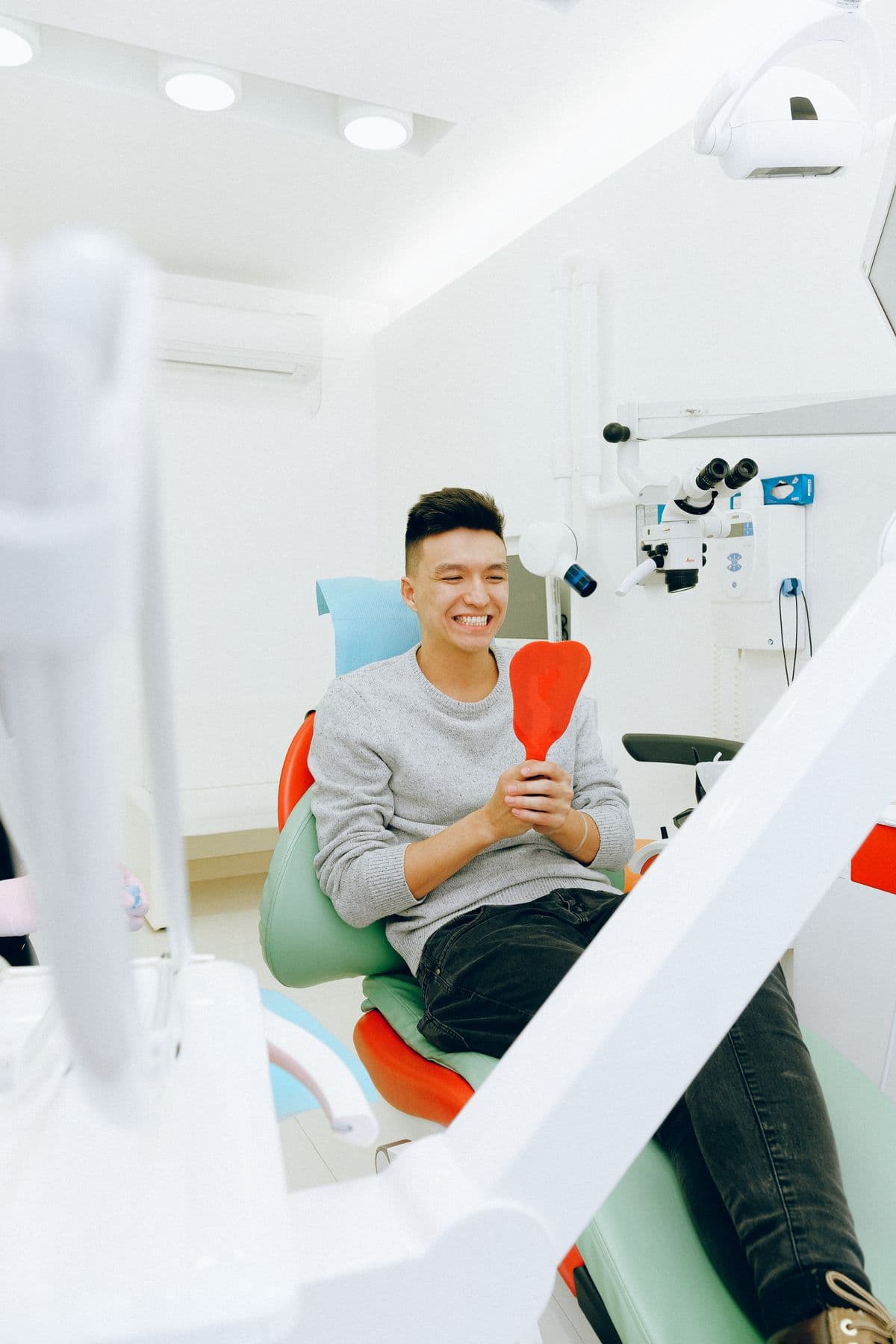
Instead of the goopy putty impressions of decades past, a handheld iTero scanner builds a precise 3D model of your teeth in a few minutes. The scan goes directly to Invisalign's planning software. Before you leave that same visit, the iTero outcome simulator can show you a projected preview of where your teeth could end up, which makes the decision to proceed a lot less abstract. The full breakdown lives on our iTero scanning page.
Step 3: Digital staging and plan review
Your case is staged digitally under the program's protocols: which teeth move when, where attachments go, where IPR (small enamel reshaping) is needed. Then we sit down with you and walk through the proposed plan on screen, animated frame by frame. You see exactly where your teeth start, the path they'll take, and where they'll end up. If you want to adjust the target, a slightly different final shape, a focus on one specific tooth, we tweak the plan before any aligners are ordered.
Step 4: Aligners arrive, attachments go on
About three weeks after the scan, your aligners are printed and shipped to the office. At a placement visit, we bond the attachments: small tooth-colored bumps of dental composite placed on specific teeth. They sound more alarming than they are. Aligners are smooth plastic, and some movements need a grip point to push against; the attachments are those grip points. Most cases have some, they blend with the tooth, and they come off completely at the end. We also complete any planned IPR and hand you your first set of aligners.
Step 5: The wear rhythm
You wear each aligner 20 to 22 hours a day, off only for eating and brushing, and swap to the next set every 1 to 2 weeks on the schedule your plan specifies. This is the part where Invisalign succeeds or fails. Patients who wear them consistently finish on the planned timeline. Patients who don't end up needing more refinements or longer treatment.
- Water only with aligners in. Anything with sugar or color should be enjoyed with the aligners out.
- Brush before reinserting. Food trapped under the aligner against the tooth surface is a fast way to start a cavity.
- Clean the aligners daily. A soft toothbrush, lukewarm water, and a small amount of unscented soap. Hot water warps them.
- Keep the previous aligner. If you lose or break the current one, the previous set keeps you on track until a replacement arrives.

Step 6: Check-ins every 6 to 8 weeks
Brief visits, usually 15 to 20 minutes, with Dr. Kim or Dr. Azevedo to confirm your teeth are tracking with the plan, hand over the next batch of aligners, and make any small adjustments. We sometimes add an attachment, trim one off, or do a small amount of IPR. Most patients have 4 to 8 check-ins over the course of treatment, all in the same Thomson Drive office.
Step 7: Refinements, normal, not failure
After the initial series is finished, roughly one in three patients needs refinements: a fresh scan and additional aligners to address teeth that didn't move quite as planned. Biology has opinions, and no digital plan predicts every tooth perfectly. Refinements are a built-in part of the process, included in the original treatment fee, and they usually add 2 to 4 months to the total timeline. If you need them, nothing went wrong.
Step 8: Retainers, for life, at night
Once treatment is complete, the attachments come off, the teeth get polished, and you receive a set of clear retainers. For the first year, wear them every night while you sleep. After that, a few nights a week long-term keeps the teeth from drifting back. Skipping retainers is the leading reason patients end up in a second round of Invisalign years later.
What patients wish they'd known
- The first-week lisp fades. Your tongue adapts to the new plastic within days. Reading aloud speeds it up.
- Put an aligner case in every bag. Aligners wrapped in a napkin at a restaurant get thrown away. It happens constantly. The case is your insurance policy.
- Water only means water only. Coffee with the aligners in stains them; anything sweet pools sugar against your teeth. Plan your coffee around your wear hours.
- Keep chapstick handy. The first few days of a new set, your lips do a little more work than usual. A small thing, but every aligner patient learns it.
Wondering what all of this costs? Honest ranges, insurance details, and payment options are on our Invisalign cost page.
Reviewed by Dr. Jihoon Kim, DDS, July 2026
Common questions
Frequently asked
- How does Invisalign actually move teeth?
- Each aligner is shaped slightly differently than your current tooth position, about 0.25 millimeters of planned movement per aligner. The plastic applies gentle, sustained pressure that the periodontal ligament around each tooth root responds to over a week or two. Over a full series of aligners (anywhere from 10 to 50+), the cumulative movement straightens the smile.
- How long do I wear each aligner?
- Typically one to two weeks per aligner; your treatment plan specifies the exact schedule. You wear each aligner 20 to 22 hours a day, taking it out only to eat, drink anything other than water, and brush.
- What's the role of the attachments?
- Attachments are small tooth-colored composite bumps bonded to specific teeth. They give the aligners something to grip when a tooth needs a more complex movement, like a rotation or root tipping. Most cases have some; a typical adult case uses 6 to 15. They come off at the end of treatment.
- What happens at check-in visits?
- Every 6 to 8 weeks, you come in for a brief visit with Dr. Kim or Dr. Azevedo. We confirm the teeth are tracking with the plan, hand over the next several aligners, and make any small adjustments, adding or trimming attachments, or IPR if the plan calls for it. Most check-ins run 15 to 20 minutes.
- What is IPR?
- Interproximal reduction, a small amount of enamel reshaping between specific teeth to create room for movement. We're talking 0.1 to 0.5 millimeters at most, done with a thin sanding strip. Painless, no anesthetic needed, and only used when the plan calls for it.
- What if a tooth isn't tracking?
- It happens, and it is not a failure. About one in three Invisalign cases needs refinements: a fresh scan and additional aligners after the initial series finishes, to address teeth that didn't move exactly as planned. Refinements are included in the original treatment fee.
- Do I need a retainer after?
- Yes, for life, in some form. Teeth want to drift back toward their original positions; a retainer prevents that. Most patients wear a clear retainer (similar to an aligner) every night for the first year, then a few nights a week long-term. We discuss your specific retainer schedule at the end of treatment.
- How long is the whole process?
- Most adult cases run 9 to 18 months. Simple cases (minor front-tooth alignment) can finish in 4 to 6 months. Complex cases (significant crowding, bite correction) can take 18 to 24 months. We give you a specific timeline at the planning visit.
We'd love to see you on Thomson Drive
Call, message, or schedule online, whichever's easiest for you.