Dental implants · Lynchburg, VA
Implants planned, placed, and restored in one Lynchburg office
In-house 3D cone beam imaging, two doctors who place AND restore implants, and a 15-operatory office on Thomson Drive. No referral across town, no juggling specialists.
Lynchburg Dentist plans, places, and restores dental implants in one office at 1934 Thomson Dr, using in-house 3D cone beam (CBCT) imaging. Dr. Kim and Dr. Azevedo handle the implant surgery and the final crown or denture themselves, so you are not referred across town at any step. Implants are placed first and restored after healing, the staged protocol that protects the long-term result.
Why patients choose us for implants
Most Lynchburg practices send implant patients across town: an oral surgeon places the implant, a general dentist restores it, and you carry your records between the two hoping nothing gets lost in translation. We built our implant program so that never happens. Your 3D scan, your implant surgery, your healing checks, and your final crown all happen in one building on Thomson Drive, with one team that knows your case from the first X-ray to the final bite check.
- In-house cone beam CT. Every implant is planned on a 3D scan of your own anatomy, taken down the hall, not at an imaging center across town.
- Placed AND restored by the same doctors. Dr. Kim and Dr. Azevedo handle both the surgical and the restorative side. No hand-offs.
- Room to take care of you. Our recently expanded office grew from 6 to 15 operatories, which means implant consults, surgeries, and follow-ups without long waits.
- Honest pricing. Clear ranges up front, financing options, and a member discount: Virginia Dental Club members get 20% off our standard fee for implants. See what implants cost in Lynchburg.
The technology: 3D planning before anyone picks up an instrument
Implants placed by plan, not by feel. Our cone beam CT system, the Carestream CS 9600, is the difference between placing an implant from a flat 2D X-ray and placing one from a full 3D map of your jaw. The scan takes under a minute and shows us bone height, bone width, nerve position, and sinus anatomy in millimeter detail. From that scan we measure your bone and plan the exact position, angle, and depth of your implant before your surgery day, which means shorter appointments, smaller margins of error, and no surprises. Very few Lynchburg dental offices have this technology in the building. Ours is down the hall from the chair you'll sit in. Read how 3D cone beam imaging works, or see it alongside the rest of our technology.

The process, step by step
- 1. Consultation and 3D scan. We examine your mouth, take the CBCT scan, and tell you plainly whether an implant is right, and what it will cost.
- 2. Planning. Your doctor maps the implant position on your 3D scan. If bone grafting is needed, it gets built into the plan now, not discovered mid-surgery.
- 3. Placement. The titanium post is placed under local anesthetic, usually in 60 to 90 minutes. Most patients are back to normal routines the next day.
- 4. Healing. Over 3 to 6 months the bone fuses to the implant. This stage is where lasting implants are made, and we don't rush it.
- 5. Restoration. The same doctor who placed your implant attaches the abutment and your custom porcelain tooth, checks the bite, and you're done.
Every way we replace missing teeth
- Single tooth implant, one post, one crown, no touching the neighbors.
- Multiple tooth implants, implant-supported bridges that replace several teeth without a removable partial.
- Full-arch implants (All-on-X), a complete upper or lower arch on four to six implants, staged for results that last.
- Implant-supported dentures, snap-in stability for denture wearers tired of adhesive.
- Bone grafting, rebuilding the foundation when bone has been lost.
Am I a candidate?
If you're an adult missing one or more teeth, the honest answer is: probably, and the 3D scan will tell us for sure. Healthy gums and adequate bone are the two main requirements. Long-standing gaps often mean some bone loss, which grafting can rebuild. Smoking, uncontrolled diabetes, and certain medications call for extra planning rather than an automatic no. Dr. Azevedo's hospital-based training in treating medically complex patients means a health history that scares other offices usually doesn't scare us. The consultation is where you get a straight answer, not a sales pitch.

What implants cost, and how we keep them affordable
A single implant with its abutment and crown typically runs $3,000 to $5,000 at our office. Full-arch and implant-denture cases vary more, which is why we quote them only after a scan, from your actual anatomy, not a brochure. Two things keep costs workable for Lynchburg families: the Virginia Dental Club ($279 a year for an individual; members get 20% off our standard fee for implants.), and financing plans that spread treatment over time. Full ranges for every option are on our implant cost page.
The doctors behind the program
Dr. Jihoon Kim, DDS
Residency-trained in hospital dentistry and implantology at Providence Sacred Heart, Dr. Kim has built his practice on doing implant and root canal work in-house that other offices refer out.
Meet Dr. Kim →Dr. Nathalia Azevedo, DDS
AEGD-trained at NYU Langone with a focus on oral rehabilitation, Dr. Azevedo both places and restores implants and brings hospital-based surgical experience to complex cases.
Meet Dr. Azevedo →5.0 stars across 520+ Google reviews. Lynchburg patients consistently describe the same experience: plain-English explanations, no pressure, and work that holds up. Come see why on a consultation visit.
Real patients, real results
See real results
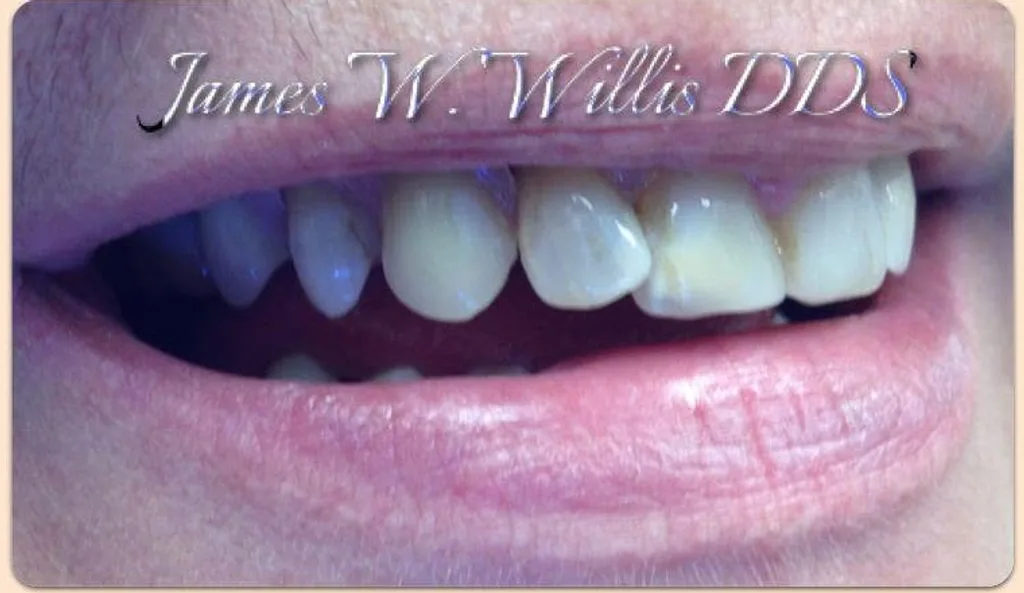
Browse before-and-after smiles treated by Dr. James Willis, real patients, not stock photography.
View the Smile Gallery →Reviewed by Dr. Jihoon Kim, DDS, July 2026
Common questions
Frequently asked
- What is a dental implant?
- A dental implant is a small titanium post surgically placed into the jawbone, where it acts as an artificial tooth root. Once the post integrates with the bone (a process called osseointegration that takes 3 to 6 months), we attach a custom-made crown, bridge, or denture to the implant, restoring both the look and the function of the missing tooth.
- Am I a candidate for dental implants?
- Most adults with one or more missing teeth, healthy gums, and sufficient jawbone are good candidates. If you've had a tooth missing for a long time, you may have lost bone in that area and may need a bone graft first. A 3D cone beam scan during your consultation tells us exactly what we're working with.
- How long does the whole process take?
- Start to finish, typically 4 to 8 months for a single implant. Implant placement is one appointment; osseointegration takes 3 to 6 months; then we make and attach the final crown. We stage the process deliberately because an implant that heals fully before it carries a tooth is an implant built to last.
- Does the procedure hurt?
- Less than most patients expect. The implant placement is done with local anesthetic, you'll feel pressure but not pain. Post-procedure soreness is usually managed with ibuprofen for a few days. Most patients return to work the next day.
- How long do dental implants last?
- Decades, often the rest of your life, when properly placed and maintained. Long-term success rates are above 95%. The crown attached to the implant may need replacement after 15 to 20 years, but the implant itself typically stays put for life.
- Who places the implants here?
- Dr. Jihoon Kim and Dr. Nathalia Azevedo both place and restore dental implants at Lynchburg Dentist. That means the doctor who plans your implant on the 3D scan is the doctor who places it and the doctor who fits your final tooth. One office, one team, one continuous plan.
- Why does in-house cone beam imaging matter?
- A cone beam CT (CBCT) scan is a 3D X-ray that shows bone volume, nerve position, and sinus anatomy in exact detail. Because our scanner is in the building, your implant is planned on your own 3D anatomy before anyone picks up an instrument, and there's no extra imaging-center appointment or outside fee.
- Are implants better than bridges or dentures?
- For most patients, yes. Implants don't require grinding down healthy neighboring teeth the way bridges do, they preserve the bone (which dentures don't), and they feel and function like your natural teeth. Bridges and dentures are still good options when implants aren't right; cost, bone availability, and overall health all factor in.
- How much do dental implants cost in Lynchburg?
- Single implants typically range from $3,000 to $5,000 total (implant, abutment, and crown) depending on the case. Virginia Dental Club members get 20% off our standard fee for implants. We also offer financing. See our implant cost page for honest ranges on every option, or come in for a precise quote after a 3D scan.
- Do you do full-arch (All-on-X) implants?
- Yes. Dr. Kim and Dr. Azevedo evaluate all full-arch cases and accept select full-arch cases right here in Lynchburg. Our protocol is deliberately staged: place the implants first, let the bone integrate, then deliver the final restoration. We believe a full arch that lasts decades beats a rushed one.
We'd love to see you on Thomson Drive
Call, message, or schedule online, whichever's easiest for you.