Single tooth · in-house
One missing tooth, one permanent solution
An implant + abutment + porcelain crown, placed and restored right here on Thomson Drive, without a specialist referral across town.
The three parts
Implant, a small titanium post placed in the jaw where the tooth root used to be. Titanium is biocompatible; the bone heals around it and locks it in place.
Abutment, a small connector that screws into the implant once the bone has healed. It’s what the crown sits on top of.
Crown, the visible tooth. Custom porcelain, shade-matched to your surrounding teeth.
Why not just leave the gap?
It’s tempting to leave a missing tooth alone, especially a back tooth nobody sees. The trouble is that the gap doesn’t stay still. Your jawbone needs the everyday pressure of chewing to stay dense, and once the tooth root is gone, the bone beneath the gap begins to shrink within the first year and keeps shrinking quietly after that. Meanwhile the teeth on either side start to lean into the open space, and the tooth above or below it slowly drifts out of its socket, searching for something to bite against.
Give it a few years and the problem is no longer one missing tooth. Tilted neighbors trap food and are harder to clean, which raises the risk of decay and gum trouble in teeth that were perfectly healthy. Your bite shifts, so chewing forces land unevenly, and that can mean worn enamel, cracked teeth, and a sore jaw. Replacing the tooth later is still possible, but it often costs more, because the shrunken bone may need graftingbefore an implant can go in. Replacing it early, while the bone is full and the neighbors haven’t moved, is the simpler, less expensive version of the same treatment.
Placed and restored in one office
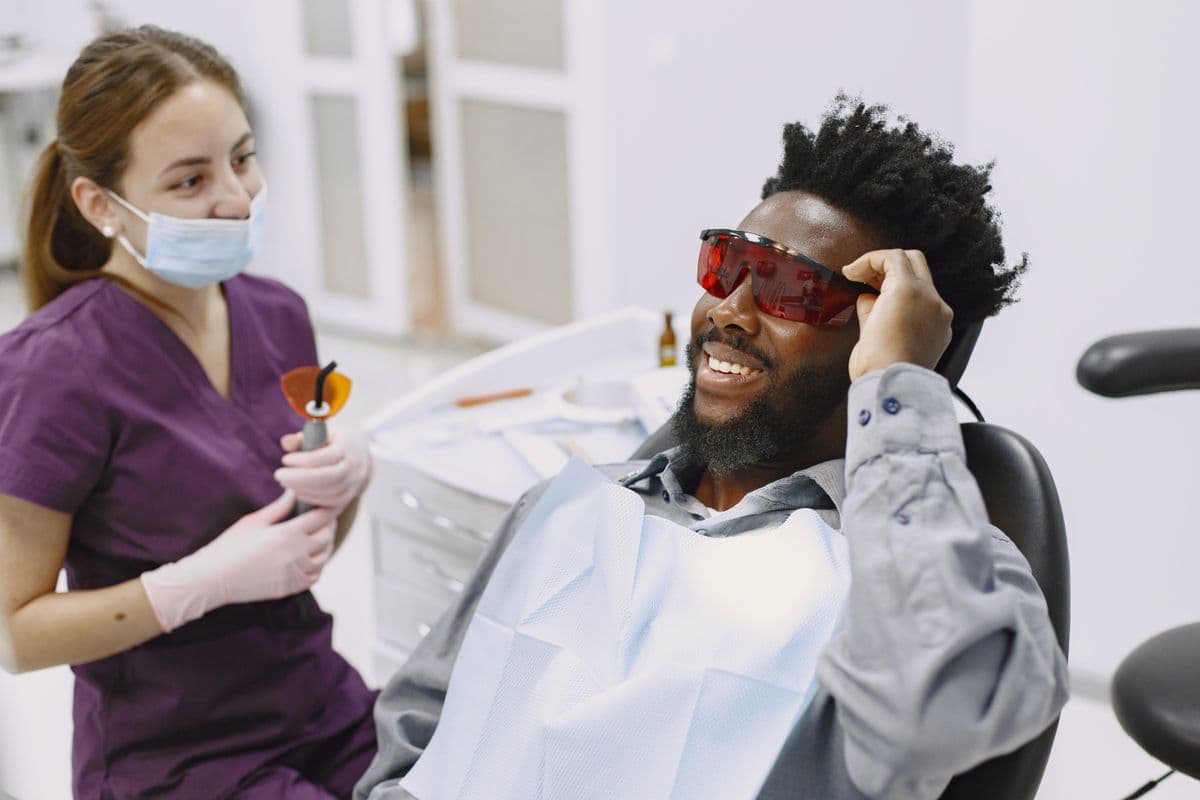
Many practices place the implant in one office and send you across town to another for the crown. Here, Dr. Kim and Dr. Azevedo handle both phases under one roof: the surgical placement and the final restoration, all in our 15-operatory office on Thomson Drive. The doctor who plans your implant is the same doctor who checks your final bite, which keeps the plan consistent from the first visit to the last.
Every single-tooth case starts with our in-house cone beam 3D scan, so the implant’s position, angle, and depth are decided on screen before surgery day, not during it. And we stage the treatment on purpose: place the implant, give the bone the months it needs to lock it in, then build the crown on a fully healed foundation. It takes a little longer than the heavily advertised shortcuts, and it’s why implants done this way tend to last decades.
The timeline
- Consultation + 3D scan, a CBCT scan shows the bone, the nerves, and exactly where the implant should go.
- Implant placement (about 60-90 minutes), fully numb. The titanium post goes in; sometimes a temporary tooth fills the space while it heals.
- Healing (3-4 months), the bone fuses to the implant. You’ll come in for short check-ins, but most of this is just waiting.
- Abutment + impression, a short visit. Abutment placed, impression taken for the lab.
- Crown delivery, final porcelain crown bonded onto the abutment. Bite checked, polished, and you’re done.
Care after your implant
- Brush and floss the implant crown exactly like a natural tooth. Implants can’t decay, but the gum line around them can become inflamed without good hygiene.
- Keep up with six-month cleanings. We use special tools to clean around implants safely.
- If you grind your teeth, wear the night guard we make for you, heavy clenching can shorten the life of an implant crown.

What a single tooth implant costs in Lynchburg
A complete single-tooth implant, meaning the implant, the abutment, and the porcelain crown, typically runs $3,000 to $5,000 at our office. You’ll receive a written quote after the CBCT scan, before anything is scheduled, so there are no surprises partway through treatment. Virginia Dental Club members get 20% off our standard fee for implants. Financing is available for the rest. For a fuller breakdown of what drives the price and how the numbers compare across options, visit our implant cost page.
Reviewed by Dr. Jihoon Kim, DDS, July 2026
Common questions
Frequently asked
- Why is a single implant better than a bridge?
- An implant replaces the missing tooth without altering the teeth on either side. Bridges require shaping (and slightly weakening) the healthy neighbors to serve as anchors. Implants also preserve the bone where the tooth used to be, bridges don't.
- How long does the whole process take?
- Most single-tooth cases take 4-6 months total. The implant placement itself is a single visit; the healing period (osseointegration, when the bone fuses to the implant) takes 3-4 months; then we attach the abutment and the final crown over two more visits.
- Does the surgery hurt?
- Most patients are surprised how comfortable it is. You're fully numb during the placement, and post-op soreness is usually mild, much less than a typical extraction. We give you a clear after-care plan and a phone number for anything that doesn't feel right.
- Am I a candidate?
- Most adults with good general health and enough bone in the area are candidates. We use a 3D CBCT scan to confirm bone volume before scheduling surgery. Smokers, uncontrolled diabetics, and patients on certain medications need extra evaluation, but it's rarely a hard stop.
- What if I don't have enough bone?
- Bone grafting can rebuild what's lost. Sometimes it's done at the same visit as the implant; sometimes it's a separate procedure done first. We'll know after the CBCT scan and walk you through the options.
- How long does an implant last?
- Properly cared for, dental implants routinely last 20+ years and often a lifetime. The crown on top may need replacement after 10-15 years, but the implant itself usually doesn't.
We'd love to see you on Thomson Drive
Call, message, or schedule online, whichever's easiest for you.